← Back to Blog

Best Launch Monitors 2026: The Complete Buyer's Guide ($300–$15K)

Every launch monitor worth buying in 2026, ranked by what actually matters — accuracy, value, and whether you'll still use it in a year. From garage practice to tour-level data.

The Short Version

If you're here to buy and don't want to read 3,000 words:

Still here? Good. Let's talk about why you probably don't need to spend what you think you do.


Why This Guide Exists

Launch monitors used to be $20,000 tour equipment. Now you can get useful ball data for $300. That's great — but it also means there are 30+ options fighting for your money, and most "best launch monitor" lists are just affiliate link farms with no opinion.

This isn't that. We've ranked every launch monitor worth considering by what actually matters for weekend golfers: accuracy you can trust, data you'll actually use, and value that makes sense for how you play.

If you want to compare specs side-by-side, use our Launch Monitor Comparison Tool or jump straight to a head-to-head on our compare site. This guide is about which one you should buy and why.


How We Ranked Them

We weighted four things:

  1. Ball data accuracy (40%) — Does the carry number match reality? Is spin consistent shot-to-shot?
  2. Practical value (25%) — What do you get per dollar? Does it work where you'll actually use it?
  3. Software ecosystem (20%) — Can you connect it to GSPro, E6, or whatever sim software you want?
  4. Build quality + longevity (15%) — Will this thing still work well in 3 years?

We didn't weight brand prestige, marketing buzz, or "what Tiger uses." We care about what helps you hit better shots.


Budget Tier ($300–$800)

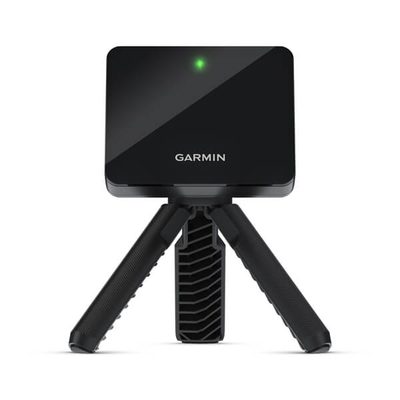
Garmin Approach R10 — Best Overall Budget Pick

Price: ~$600 | Technology: Doppler Radar | Best for: Range practice, casual sim play, beginners

The R10 is the launch monitor that got a million golfers hooked on data. At $600, it tracks ball speed, launch angle, spin rate, carry distance, club path, and face angle — metrics that used to require $5,000+ equipment.

What's good: Portable (fits in your bag), great app integration with Garmin Golf, works outdoors and indoors, 42,000+ virtual courses for sim play. Battery lasts 10+ hours. The data is accurate enough to gap your clubs, track improvement over weeks, and identify consistent misses.

What's real: Spin readings are inconsistent, especially with wedges. Indoor accuracy improves with metallic-dot (RCT) balls but doesn't match camera-based systems. Club data is useful directionally but not precise enough for serious fitting. If you already own one and want more, the upgrade path is clear — but if you're starting from zero, this changes how you practice.

Buy it if: You want data-driven practice for under $700 total (R10 + net + mat). You'll learn more about your swing in a month than a year of guessing.

Check Price on Amazon


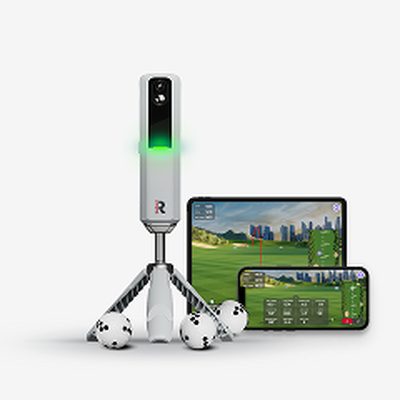
Rapsodo MLM2PRO — Best for Visual Feedback

Price: ~$700 | Technology: Doppler Radar + Camera | Best for: Visual learners, range practice, shot tracing

The MLM2PRO adds something the R10 doesn't: a built-in camera that overlays shot trace on real video of your swing. You see the ball flight arc on top of actual footage. For golfers who learn by seeing, this is powerful.

What's good: Shot tracing is genuinely useful for understanding ball flight shape. Spin accuracy edges out the R10 thanks to the camera-assist fusion. Indoor mode works with the included hitting strip. GPS-powered outdoor course mapping is a nice touch.

What's real: The app experience is less polished than Garmin's. Sim software compatibility is more limited — GSPro works via third-party bridge, but it's not as seamless as Garmin or FlightScope integration. The form factor is wider than the R10, slightly less pocketable.

Buy it if: You're a visual learner who wants to see your shot shape, not just read numbers. The shot trace alone is worth the $100 premium over the R10 for many golfers.

Check Price on Amazon


Swing Caddie SC4 — Best Standalone (No Phone Needed)

Price: ~$600 | Technology: Doppler Radar | Best for: Range warriors who don't want phone dependency

The SC4's killer feature: a built-in LCD display that shows your data without needing a phone or tablet. Set it down, swing, look at the screen. Done. For golfers who hate fiddling with apps at the range, this is liberating.

What's good: Voice output calls your carry distance after each shot (surprisingly addictive). Remote control included. No phone pairing hassles — just turn it on and hit. Works cleanly outdoors. Barometric pressure sensor for altitude-adjusted distances.

What's real: Fewer data points than the R10 or MLM2PRO. No simulator compatibility to speak of. Limited indoor value. This is a range-first device, and it's excellent at that — but if you want virtual golf or detailed club data, look elsewhere.

Buy it if: You go to the range 2+ times a week and want instant feedback without app friction. The "just works" factor is underrated.

Check Price on Amazon


Mid-Range Tier ($1,500–$3,500)

This is where the real action is. These monitors are accurate enough to trust for practice and simulator play, portable enough for mixed use, and priced where the data quality jump over budget tier is significant and measurable.

FlightScope Mevo Plus — Best All-Around Launch Monitor

Price: ~$2,000 | Technology: 3D Doppler Radar | Best for: Serious golfers who want one device for everything

The Mevo Plus is the r/golf community's consensus pick for good reason. It tracks 16+ metrics directly (no metallic balls needed), works indoors and outdoors without adjustment, and connects to every major sim platform.

What's good: Ball data accuracy rivals monitors twice the price. Club data is genuinely useful — path, face angle, dynamic loft, attack angle. Portable enough for the range, accurate enough for a permanent sim setup. The Gen 2 version adds USB-C charging and doubles battery life. FS Golf app is mature and reliable.

What's real: Indoor spin can occasionally drift on short irons if your hitting space is under 8 feet of ball flight. Software compatibility is the broadest in the class — GSPro, E6, TGC, Awesome Golf, Creative Golf all work natively or via bridge. At $2,000, it's a significant investment, but the per-use cost drops fast if you practice regularly.

Buy it if: You want one launch monitor that does everything well. Indoor, outdoor, range, sim — it handles all of it without compromise. This is the Swiss Army knife of launch monitors.

Check Price on Amazon


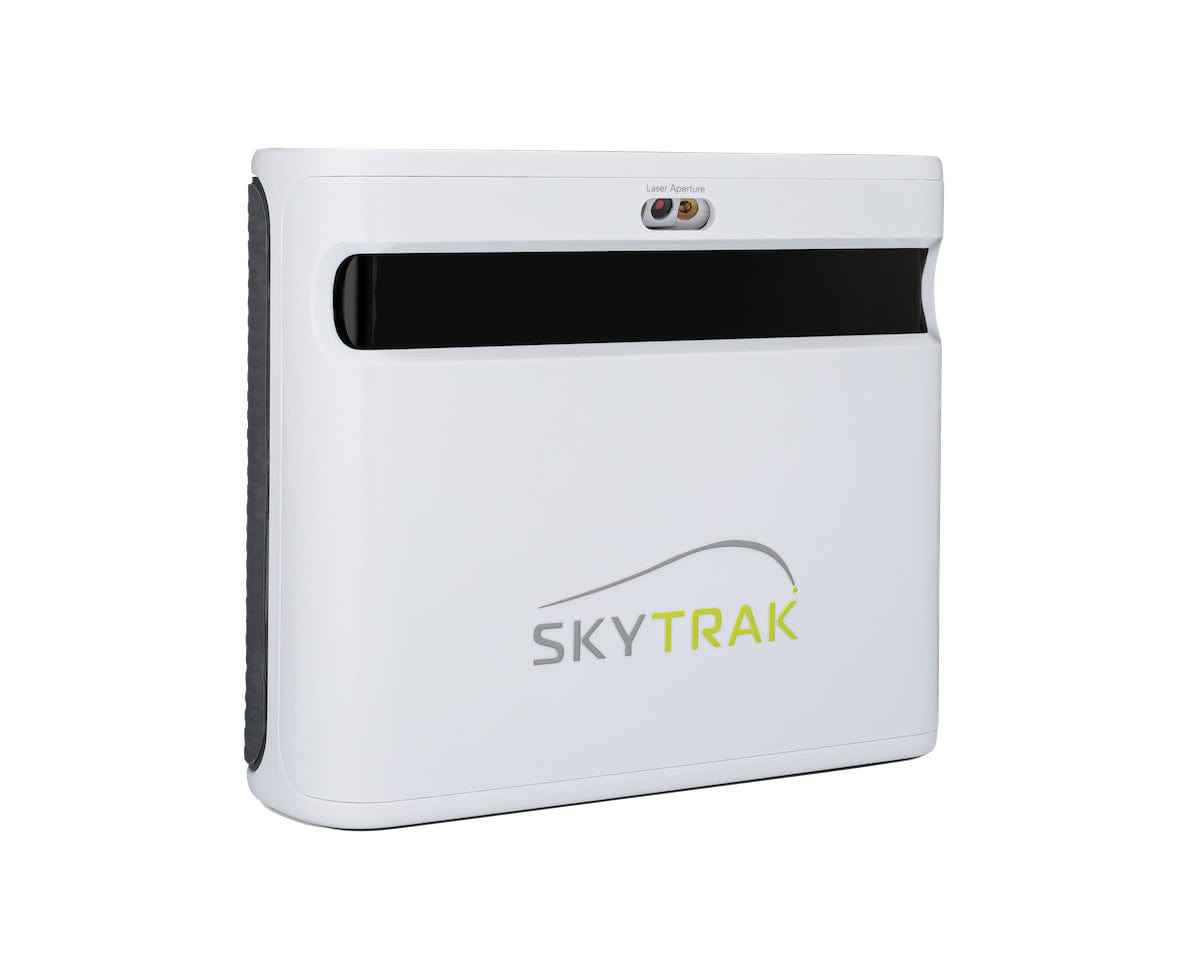
SkyTrak+ — Best Indoor Ball Data

Price: ~$2,995 | Technology: Photometric (Dual Camera) | Best for: Dedicated indoor setups, accuracy-obsessed golfers

The SkyTrak+ is the upgraded version of the launch monitor that owned the mid-range market for years. Camera-based technology reads the ball at impact with high-speed cameras — which means indoor accuracy doesn't depend on ball flight distance.

What's good: Ball speed accuracy within 1%. Spin consistency that rivals the Foresight GCQuad on most shots. The SkyTrak+ adds club data that the original lacked — face angle, club path, dynamic loft. WiFi connectivity (the original needed a USB cable, which was annoying). Works on Mac and PC — one of the few in this range that supports macOS natively.

What's real: The SkyTrak+ shines indoors and that's where you should use it. Outdoor performance is fine but direct sunlight can affect camera accuracy. It's less portable than the Mevo Plus — you won't casually throw this in your bag for a range session. And the software subscriptions add up: SkyTrak's own game improvement plan is $99/year, play & improve is $199/year. Factor that into the total cost.

Buy it if: Your setup is primarily indoor and you want the tightest ball data under $3,000. The camera-based readings are noticeably more consistent shot-to-shot than radar units in short indoor spaces. If you're building a dedicated sim room, this is the monitor to build around (until you can justify a Foresight or Uneekor).

→ Read our full SkyTrak+ review for the complete breakdown — setup costs, space requirements, and why the clearance pricing makes it the best value indoor monitor right now.

→ Compare: SkyTrak+ vs Mevo Plus | SkyTrak+ vs Garmin R10 | SkyTrak+ vs Uneekor QED

Check Price on Amazon


Bushnell Launch Pro — Foresight Tech, Accessible Price

Price: ~$3,000 | Technology: Photometric (Camera) | Best for: Golfers who want Foresight accuracy without Foresight pricing

Here's the industry's worst-kept secret: the Bushnell Launch Pro uses the same camera sensor as the Foresight GC3. Same hardware, same ball data quality, Bushnell branding. You're getting $8,000 accuracy in a $3,000 package.

What's good: Ball data that's indistinguishable from the GC3. Photometric accuracy that excels indoors. Sturdy build quality. The base unit includes ball data at no subscription; club data requires a $1,000 software unlock (Foresight's FSX Play or FSX Pro).

What's real: That software unlock is the catch. $3,000 + $1,000 for club data puts you at $4,000 — which narrows the gap to the Mevo Plus + a lot of range balls. No club data out of the box means you're paying for potential unless you commit to the unlock. But if you do, you have a legit tour-grade ball data device for a fraction of the GCQuad price.

Buy it if: You want the best ball data accuracy under $3,500 and don't mind paying separately for club data later. If Foresight's reputation matters to you and the GCQuad is out of budget, this is your door in.

Check Price on Amazon


Premium Tier ($4,000–$6,000)

Uneekor QED — Best Overhead Setup

Price: ~$5,000 | Technology: Photometric (Dual Camera, Overhead) | Best for: Permanent sim rooms, clean hitting experience

The QED mounts to your ceiling and looks down at impact. No device sitting behind the ball. No tripod to trip over. Just step up and swing. It's the most natural hitting experience of any launch monitor.

What's good: Full club AND ball data included at no additional subscription cost — face angle, path, dynamic loft, speed, everything. Most competitors charge extra for club data. Uneekor gives it to you out of the box. Putting analysis included. High-speed dual cameras capture impact from above with excellent consistency.

What's real: This is a permanent installation. Ceiling mounting, alignment, dedicated space — you're not moving this. Requires marked balls (stickered), which is a minor nuisance. But once installed, it disappears. You forget it's there. The data quality is exceptional, and the overhead perspective means no line-of-sight issues that ground-level units can have.

Buy it if: You're building a permanent simulator room and want the cleanest, most natural hitting experience. The QED is what you build the room around.

Check Price on Amazon


Full Swing KIT — Tour Pedigree, Consumer Package

Price: ~$4,500 | Technology: Doppler Radar + Infrared Optical (Fusion) | Best for: Golfers who want dual-technology accuracy and brand prestige

Tiger Woods uses Full Swing. So do dozens of tour pros. The KIT brings their commercial simulator technology into a consumer-friendly portable package with dual-technology tracking — radar for flight, infrared for impact.

What's good: Fusion tracking combines the strengths of both technologies. No metallic balls or stickers needed. 16 data points per swing. Works indoors and outdoors seamlessly. Build quality is premium — this feels like a $5,000 device.

What's real: The app and software experience lag behind FlightScope and SkyTrak. At this price point, the Uneekor QED offers better indoor value if you're doing a permanent install. The KIT's portability advantage matters if you want indoor + outdoor flexibility at this tier.

Buy it if: You want dual-technology accuracy in a portable format and the tour-grade pedigree matters to you. It delivers on data quality — the question is whether that matters more than the Uneekor's overhead convenience at a similar price.

Check Price on Amazon


Tour-Level Tier ($8,000+)

Foresight GCQuad — The Industry Standard

Price: ~$14,500 | Technology: Quadrascopic (4 Camera) | Best for: No-compromise accuracy, professional fitting, players who trust data absolutely

The GCQuad is what Titleist uses to test golf balls. What PGA Tour fitters use for club fitting. What teaching pros reference as ground truth. Four high-speed cameras capture every detail of ball-club interaction at impact. The data isn't just accurate — it's the standard other monitors are measured against.

What's good: Ball data accuracy is the best in the portable monitor category. Period. Spin consistency is unmatched. Club data is comprehensive. No metallic balls, no stickers. Works flawlessly indoors with zero calibration drift. Putting analysis is the best in the business. The device will last a decade.

What's real: It costs as much as a used car. The software licenses (FSX Play, FSX Pro) add to the cost. The learning curve for interpreting tour-level data is steep if you're a 20-handicapper. You don't need this. But if you've built the room, done the math, and decided you want the best — it's the best. Full stop.

Buy it if: You want to end the "which launch monitor" conversation permanently. You've graduated past budget and mid-range, you understand what the data means, and you want the most accurate portable launch monitor money can buy.

Check Price on Amazon


Trackman 4 — The Legend

Price: ~$20,000+ | Technology: Dual Radar | Best for: Tour professionals, commercial facilities, people who would buy a launch monitor and a sports car in the same month

Trackman needs no introduction. The orange box is golf's most recognized piece of technology. Every PGA Tour broadcast showing "ball speed: 173 mph" is Trackman data.

What's good: Dual radar tracking provides the most comprehensive ball flight data available. Full ball flight tracking from launch to landing — not estimated, actually measured. Club data is extensive. The Trackman Performance Studio software is the most polished in the industry. The Trackman brand carries weight — if you're a teaching pro or running a commercial facility, nothing else says "serious" like Trackman.

What's real: At $20K+, this is a business purchase or a wealthy golfer's hobby purchase. For home use, the GCQuad delivers comparable accuracy at $6,000 less. For outdoor tracking, Trackman's full-flight measurement is genuinely superior. For indoor use, the advantage over a GCQuad narrows significantly.

Buy it if: You're a teaching professional, running a commercial facility, or have the budget and want the absolute pinnacle. For home sim use, the GCQuad or Uneekor EYE XO2 are better values.


Which One Should You Actually Buy?

Skip the analysis paralysis. Here's the decision tree:

"I want to try data-driven practice for the first time"Garmin R10 ($600). Low risk, high reward. Upgrade later if you get hooked.

"I'm serious about improving and want one monitor that does everything"FlightScope Mevo Plus ($2,000). Range, sim, indoor, outdoor — it handles all of it.

"I'm building an indoor sim room"SkyTrak+ ($2,995) for the best indoor ball data under $3K. Or Uneekor QED ($5,000) for the cleanest permanent installation.

"I want the best and I'll know it when I see it"Foresight GCQuad ($14,500). You've already decided. This just confirms it.

"I just want carry distance and ball speed at the range, no fuss"Swing Caddie SC4 ($600). No phone, no app, just data.


Before You Buy: The Checklist

Don't spend a dollar until you've answered these:

  1. Where will I use it? Indoor-only → camera-based. Mixed → radar. Outdoor-only → radar.
  2. What's my total budget? Include net/screen, mat, software, and any subscription fees — not just the monitor.
  3. Do I want simulator play? If yes, make sure your monitor connects to GSPro, E6, or your platform of choice.
  4. How much space do I have? Measure ceiling height, depth, and width with your longest club in hand.
  5. What data matters? Carry + ball speed is enough for most practice. Spin + club data matters for fitting and sim play.

We built a full Launch Monitor Buyer Checklist that walks through every consideration. Run through it before you order.


updatedAt: "2026-03-15"

The best launch monitor is the one you actually use. A $600 Garmin R10 that gets 200 practice sessions beats a $15,000 GCQuad collecting dust in a garage you never finished. Start where you are. Upgrade when the data proves you should.

Quick Comparison

Best Launch Monitor Paths Right Now

If you want useful data without overpaying, start with these three options.

Best Value

Rapsodo MLM2PRO

Serious data + app ecosystem at a mid-tier price.

Pros

  • Strong feature set
  • Great for home practice

Cons

  • Subscription for full features
  • Indoor setup needs care
Check Live Price

Most Complete

SkyTrak+

Deeper sim features and reliable indoor usage.

Pros

  • Sim-ready
  • Trusted accuracy

Cons

  • Higher total cost
  • Best with paid software
Check Live Price

Premium Pick

Garmin R10 / Bushnell LPi

Pick based on portability vs fixed sim use.

Pros

  • Portable options available
  • Good ecosystem support

Cons

  • Can get expensive fast
  • Model fit matters
Check Live Price

We may earn a commission from links on this page. Disclosure

Frequently Asked Questions

What is the best launch monitor for the money in 2026?

The FlightScope Mevo Plus (or Gen 2) at ~$2,000 offers the best balance of accuracy, portability, and software compatibility. For budget buyers, the Garmin Approach R10 at ~$600 delivers 80% of the experience. For dedicated indoor setups, the SkyTrak+ at ~$2,995 has the best ball data in its class.

Do I need a launch monitor if I'm a high handicapper?

Yes — arguably more than a low handicapper. High handicappers benefit most from objective data because they can't feel the difference between a 12° and 16° launch angle yet. A launch monitor turns vague feelings into measurable progress. Even a $300 budget option gives you useful feedback.

What's the difference between a launch monitor and a golf simulator?

A launch monitor is the sensor device that measures ball and club data. A golf simulator is a complete setup — launch monitor plus screen, projector, software, and enclosure — that lets you play virtual rounds. Every simulator needs a launch monitor, but you can use a launch monitor on its own at the range, in your backyard, or hitting into a net.

Are cheap launch monitors accurate enough to be useful?

Yes, with caveats. Budget monitors ($300-$800) measure ball speed and carry distance accurately enough to track improvement and gap your clubs. Where they fall short is spin consistency — especially with wedges and short irons. For practice and improvement, they're excellent. For club fitting or simulator play, spend more.

Radar vs camera launch monitors — which should I buy?

Camera-based (photometric) monitors like SkyTrak+ and Foresight excel indoors — they read the ball at impact and don't need full ball flight. Radar monitors like FlightScope and Garmin are more portable and work great outdoors. If you're purely indoor, lean camera. If you want indoor/outdoor flexibility, lean radar.

Can I use a launch monitor at the driving range?

Absolutely. Portable monitors like the Garmin R10, Rapsodo MLM2PRO, and FlightScope Mevo Plus are designed for range use. Set them behind the ball, connect to your phone, and you get instant data on every shot. It transforms a bucket of balls from mindless swinging into productive practice.

Join the conversation

No comments yet

Newsletter

Free: 2026 Launch Monitor Buyer Checklist

Get the exact checklist we use to pick launch monitors by budget, indoor accuracy, software fees, and total setup cost.

Free, every Thursday. Unsubscribe anytime.